Ocean County Flood Insurance Cost by Zone 2026
Why "cost by zone" is the wrong question under Risk Rating 2.0, and what an Ocean County shore home actually costs to insure in 2026.

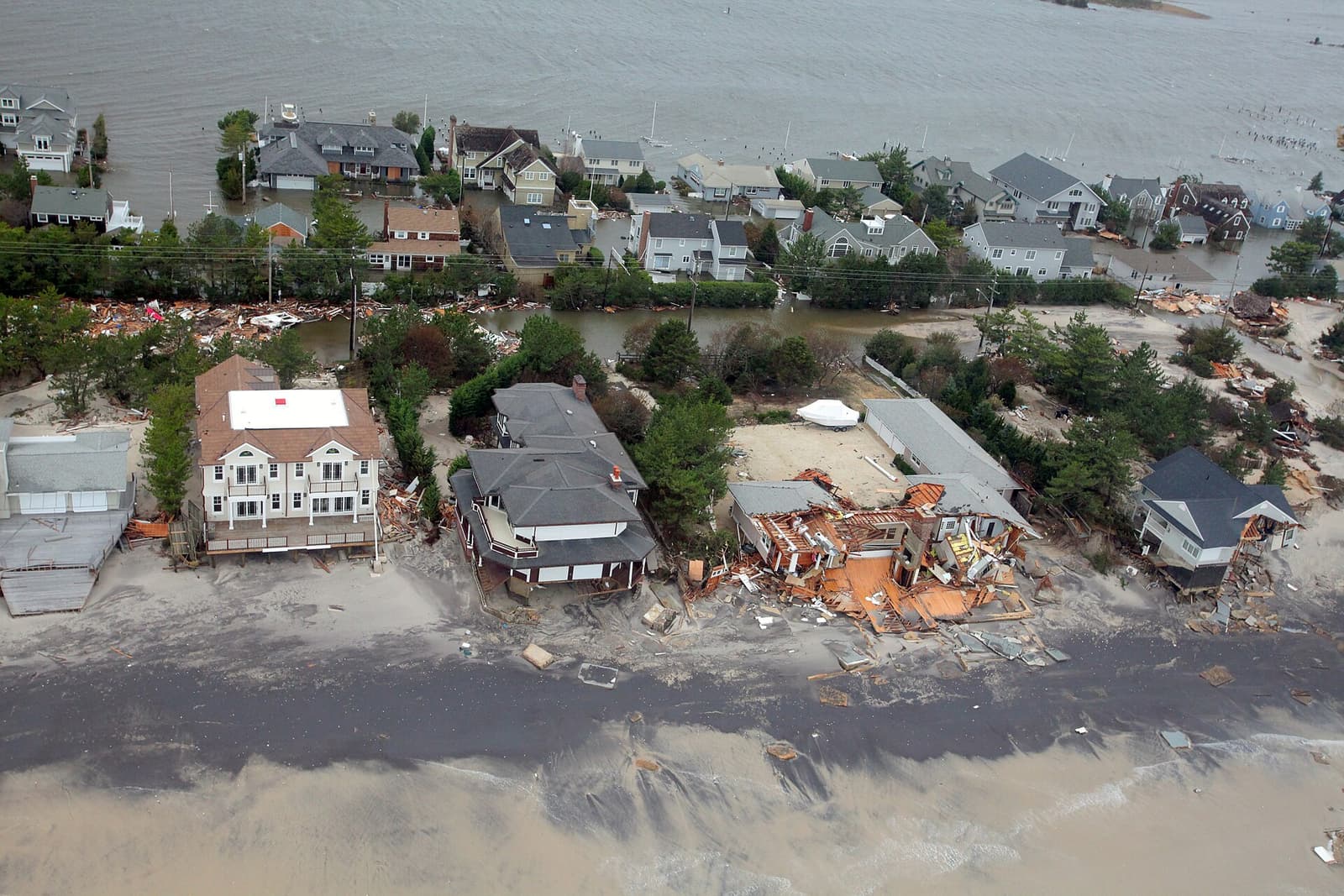
Image: The National Guard (public domain), via Wikimedia Commons
Updated June 20, 2026
Let me give you the honest answer most "Ocean County NJ flood insurance cost by flood zone" guides won't: under FEMA's Risk Rating 2.0, there is no longer a flat "VE costs this, AE costs that" price. As of April 2022, FEMA prices each property individually, so a flood zone tells you whether coverage is mandatory and what the building code requires, but it no longer sets your NFIP premium. The only number that matters is a real quote on the specific home.
I track the Monmouth and Ocean County luxury corridor for a living, and the gap between what the search results say and what my buyers actually pay at closing is enormous. This guide fixes that, with directional zone ranges, real town data, and the buyer-critical 2026 facts the cost-by-zone articles leave out.
Ocean County flood insurance cost by zone at a glance
Flood zone no longer determines your NFIP premium in Ocean County. Under Risk Rating 2.0, FEMA prices each home by distance to water, first-floor height versus base flood elevation, foundation, and replacement cost. Use zone ranges only as directional context, then get a real quote on the actual property.
- NFIP coverage cap: $250,000 building / $100,000 contents (a $2M+ shore home needs a private excess layer on top)
- NJ average premium actually paid: roughly $933/yr (ValuePenguin, updated Jul 9, 2025; range about $215 to over $4,000); Better Flood's statewide figure is $961
- The $2,129/yr figure you keep seeing: that is the Risk Rating 2.0 full-risk target (Clovered, Feb 2025), not today's average paid
- Directional zone ranges (askdoss, 2026): high-risk AE/VE/A about $1,200-$3,500; Zone X about $400-$700; Ocean County AE/VE shore band about $2,500-$6,000
- Biggest controllable lever: an Elevation Certificate ($400-$700 on LBI)
- 2026 timing risk: NFIP authorization is currently set to expire midnight September 30, 2026
How does Risk Rating 2.0 change "cost by flood zone"?
It changes everything. Since FEMA fully implemented Risk Rating 2.0 in April 2022, flood zones are no longer used to calculate an NFIP premium. Pricing is now per-property: distance to water, lowest-floor height versus base flood elevation, foundation type, replacement cost, and prior claims. The zone still sets the rules, not the rate.
This is the single biggest error in competitor "cost by zone" guides. They publish pre-2021 flat zone-rate tables as if they were current. They are not. Two identical-looking VE oceanfront homes one block apart can price very differently because one sits two feet higher on its pilings and the other sits closer to the water.
What your zone still controls: whether flood insurance is mandatory (any home in a Special Flood Hazard Area with a federally backed mortgage), and what the building code demands for elevation and construction. What it no longer controls: the number on your NFIP bill. So when a buyer asks me "what does VE cost," my honest answer is the Prodigy line I have adopted: get a real quote on this home before you fall for any zone-rate table.
What do the flood zones mean for risk and price?
Zone risk and price still ladder predictably, even though zone no longer sets the NFIP price. Here is the hazard ordering with the directional ranges from askdoss (updated December 2025). Treat these as context, not quotes, because Risk Rating 2.0 prices the specific property.
| Zone | What it means | Directional NJ range (2026) |
|---|---|---|
| VE / V | Coastal high-hazard, wave action; strictest building rules, highest elevation requirements | Top of the AE/VE/A band, roughly $1,200-$3,500 (Ocean County shore band $2,500-$6,000) |
| AE | Base flood elevation established, no wave velocity; most barrier-island bay sides | High-risk band, about $1,200-$3,500 |
| A | Special Flood Hazard Area without a determined base flood elevation | High-risk band, about $1,200-$3,500 |
| X (shaded) | 0.2% (500-year) zone; insurance optional and cheaper | Roughly $400-$700 |
| X (unshaded) | Outside the 1% / 0.2% floodplain | Lowest, roughly $400-$700 |
For older blended-average context, Policygenius once published NJ averages by zone (high-risk A/V about $1,026, moderate B/C/X about $637), but that rests on May-2022 FEMA data on a page updated March 2023, predating Risk Rating 2.0. I include it only so you recognize it when you see it republished as current. It is stale.
So what is the average flood insurance cost in NJ?
There are two "average" numbers in circulation and they are not interchangeable. The average NFIP premium actually paid in New Jersey is roughly $933/yr (ValuePenguin, updated July 9, 2025), with a range from about $215 to over $4,000; Better Flood's statewide figure is $961 across 224,541 policies. That is what the typical policyholder pays today.
The other number, the ~$2,129/yr you see quoted everywhere (Clovered, updated February 2025), is the Risk Rating 2.0 full-risk target, up about 96% from a pre-2021 $1,081, and the 13th-highest in the country. It is not what the average homeowner pays right now. Most existing policyholders pay less because they are still on the glidepath toward that full-risk rate. Anyone presenting $2,129 as "the average NJ homeowner pays" is conflating the target with the current reality.
Why does a new buyer pay more than the seller did?
This is the most important sentence in the entire guide, and almost no competitor states it: a new policy is charged the full-risk rate from day one. The roughly 18%-per-year increase cap (the glidepath) protects only existing, continuously covered policyholders moving toward their full-risk rate. It does not transfer to you automatically when you buy.
So do not assume you inherit the seller's comfortable capped premium. A lapsed policy also reverts to full-risk. There is one workaround I always check on high-exposure homes: you can preserve the seller's lower glidepath rate by assuming or assigning the seller's existing NFIP policy through a name substitution at closing. On an oceanfront VE home where the seller has been on the program for years, that assignment can be worth thousands a year, and it is the kind of thing I put in front of buyers before we write the offer.
What about the eye-watering $15,859 VE quote I read about?
You may have seen a VE figure of about $15,859/yr floating around. It is a real number, but you have to read it carefully. It comes from a single Better Flood case study for a non-elevated home with $250K building / no contents / a $5,000 deductible, and that home is in Ocean City, Cape May County, not Ocean County. It is a clearly labeled worst-case marketing example, not a typical Ocean County figure.
The same source quotes private carriers between $600 and $2,500 for that same property. That spread is the whole lesson: a non-elevated VE home can produce an extreme NFIP number, while the private market often prices the identical risk dramatically lower, and an elevated VE home pays a fraction of the worst case. Never let an unelevated-home headline price stand in for what an elevated shore home actually costs.
What do Ocean County town averages actually tell you?
They tell you relative ordering, not your quote. Below are Better Flood's town-wide blended NFIP averages from one dated FEMA dataset. Read the caveat carefully: these blend thousands of mostly-elevated, post-Sandy, glidepath-capped existing policies. They understate what a buyer of a non-elevated or oceanfront home will be quoted at full-risk.
| Town | Blended town-wide NFIP average | Policy count |
|---|---|---|
| Mantoloking | $1,737 | 405 |
| Bay Head | $1,280 | 727 |
| Beach Haven | $1,158 | 2,136 |
| Harvey Cedars | $1,024 | 955 |
| Barnegat Light | $802 | 917 |
| Lavallette | $791 | 2,110 |
| Toms River | $864 | 8,964 |
| Brick | $758 | 4,221 |
Mantoloking sitting highest reflects its oceanfront and lagoon VE exposure; the bay-side towns like Lavallette come in lower. But notice the trap: Beach Haven, on the Long Beach Island chain, averages roughly $1,158-$1,184/yr and was actually Policygenius's most expensive of 40 NJ towns with 1,000+ NFIP policies. That low blended number exists precisely because so many Beach Haven homes were elevated above base flood elevation after Sandy. For elevated Beach Haven homes specifically, explorelbihomes cites roughly $1,200-$1,500/yr. The elevation is the reason the average looks tame, and that is the strategy you want to copy.
How do you actually lower a flood premium in Ocean County?
Elevation is the answer, and proving it is the cheapest first move. An Elevation Certificate costs $400-$700 on LBI and is among the highest-leverage things you can do, because Risk Rating 2.0 sometimes relies on an automated first-floor read that understates a home's true height. If the certificate documents you sit higher than FEMA assumed, the premium drops. Industry and third-party estimates (not FEMA-published figures) put the savings on the order of 15-30% per foot above base flood elevation, with the biggest gain on the first foot.
When the home is not high enough, physically elevating a Jersey Shore house runs roughly $40,000-$150,000 turn-key (bare jacking and resetting alone is closer to $12K-$30K). It is a major project, but on a high-exposure oceanfront home it can pay for itself in premium savings and resale value. Here is the lever ladder I walk buyers through:
- Get the Elevation Certificate first ($400-$700) and check whether FEMA understated your first-floor height.
- Confirm your town's Community Rating System discount (more on that below).
- Shop the private market against NFIP, not just NFIP alone.
- On a teardown or major renovation, design new construction with freeboard above base flood elevation from the start.
One important limit on the elevation grant everyone hopes for: NFIP's Increased Cost of Compliance (ICC) pays up to $30,000 (with up to a $15,000 advance) toward elevation, relocation, or floodproofing, but only if the building is in a Special Flood Hazard Area, carries an active NFIP policy, and is declared substantially damaged under the 50% rule or repetitively damaged. It is not a pre-emptive elevation grant you can tap just because you want to lift the house.
Do Ocean County's CRS discounts save real money?
Yes, and they are town-specific. Under FEMA's Community Rating System, participating towns earn premium discounts that step 5% per class, from Class 9 (5% off) up to Class 1 (45% off). In our corridor, Stafford Township and Long Beach Township are both Class 5, which is 25% off NFIP premiums. Mantoloking and Lavallette are Class 7, which is 15% off.
A critical caveat: CRS classes change every cycle. I was not able to pin down the current class for Toms River, Brick, Bay Head, or Beach Haven for this guide, so do not take a number on faith. Before you bank on a discount, verify the town's current class directly with its municipal floodplain manager. It is a five-minute phone call that can change your math by hundreds a year.
What about a $2M-plus luxury home?
The NFIP cap forces the conversation. NFIP residential coverage maxes out at $250,000 building and $100,000 contents, which is a rounding error against a multimillion-dollar oceanfront home. Above that cap you need a private excess flood layer, and the private market is built for it: carriers like Neptune, Wright Flood, Aon Edge, and Chubb write well past the NFIP limit, with Chubb going up to $15M combined dwelling and contents.
Private is not just for higher limits, either. Chubb premiums start "as low as $500," Neptune's typical is around $985, and Milliman found roughly 90% of Sandy-struck NJ homes could see lower rates through private insurers. What I will not do is hand you a single dollar figure for a $2M excess layer on a VE oceanfront home, because there isn't an honest one. That layer is fully underwritten per property. Anyone quoting you a clean number for it before pulling the home's data is guessing. Get a real quote.
What 2026 timing risk should buyers watch?
The one almost no cost-by-zone guide mentions: NFIP authorization is currently set to expire at midnight September 30, 2026 (extended by legislation signed February 3, 2026). Because reauthorization is short-term and recurring, treat this as a status to verify at the time of closing, not a permanent fact.
Why it matters to your closing: during any lapse, NFIP cannot issue new policies or process renewals. Existing policies stay in force through their term plus a 30-day grace period, and most lenders suspend the mandatory-purchase requirement during a lapse. The practical move is to time your policy purchase and closing around the deadline and, if needed, lean on policy assignment. Remember the related rule too: the standard 30-day waiting period is waived when you buy the policy in connection with a loan closing (and shrinks to one day if you buy within 13 months of a flood-map revision), so a financed buyer can bind coverage at closing without the wait.
Your pre-closing flood verification checklist
Before you remove contingencies on any Ocean County shore home, work this list. It is the same one I run for my own buyers.
- Confirm the home's current FIRM flood zone and whether it sits in a Special Flood Hazard Area.
- Get a real Risk Rating 2.0 quote on the actual property, NFIP and private, side by side. Do not rely on zone tables or town averages.
- Obtain or commission an Elevation Certificate ($400-$700) and check it against FEMA's assumed first-floor height.
- Ask the seller for their existing NFIP policy details and whether it can be assigned to you to preserve a lower glidepath rate.
- Verify the town's current Community Rating System class with the municipal floodplain manager.
- Review the seller's flood disclosure (NJ's Flood Risk Disclosure Law, effective 2024, requires sellers to disclose known flood risk and prior damage).
- For a $2M+ home, line up a private excess layer above the $250,000 NFIP cap.
- Check NFIP reauthorization status as you approach closing, given the current September 30, 2026 expiration.
The bottom line
Stop shopping flood insurance by zone. Under Risk Rating 2.0, your zone tells you the rules, not the price, and the real number lives in a per-property quote on the specific home. The averages you see online, whether the ~$933 NJ figure actually paid or the ~$2,129 full-risk target, are context, not your bill, and town blended averages understate what a new full-risk buyer faces. The levers that actually move your premium are elevation, an Elevation Certificate, your town's CRS class, and shopping NFIP against the private market, plus the buyer-only facts that you pay full-risk from day one and that NFIP authorization is currently set to expire September 30, 2026.
If you are weighing a specific Ocean County home, I will model the flood picture into the real cost of ownership before you write the offer. Start with a home valuation to ground the numbers, then browse current listings in the IDX search. The quote is what matters, and getting it right early is the difference between a smart shore purchase and an expensive surprise.
Frequently Asked Questions
How much does flood insurance cost in Ocean County NJ by flood zone in 2026?
There is no flat by-zone price anymore. Under Risk Rating 2.0, FEMA prices each home individually. As directional context, askdoss puts high-risk AE/VE/A around $1,200-$3,500 and Zone X around $400-$700, with an Ocean County shore band of $2,500-$6,000, but only a real quote on the specific home is accurate.
Why does my flood premium differ from the seller's even in the same flood zone?
Because a new policy is charged the full-risk rate from day one. The roughly 18%-per-year glidepath cap protects only existing, continuously covered policyholders, not new buyers. You can sometimes preserve the seller's lower rate by assuming or assigning their existing NFIP policy through a name substitution at closing.
What is the average flood insurance cost in New Jersey?
Two figures circulate. The average actually paid is roughly $933 per year (ValuePenguin, July 2025), with Better Flood citing $961. The widely quoted $2,129 (Clovered, February 2025) is the Risk Rating 2.0 full-risk target, not today's average paid, since most existing policyholders are still on the glidepath.
Do Ocean County town averages tell me what I will pay?
No. Blended town averages like Mantoloking $1,737 or Lavallette $791 (Better Flood) come from a dated FEMA dataset of mostly elevated, post-Sandy, glidepath-capped policies. They show relative ordering only and understate what a new buyer of a non-elevated or oceanfront home will be quoted at full-risk.
How can I lower flood insurance on a Jersey Shore home?
Elevation is the biggest lever. Start with an Elevation Certificate ($400-$700 on LBI) in case FEMA understated your first-floor height. Confirm your town's CRS discount, shop NFIP against private carriers, and on a major project build with freeboard above base flood elevation from the start.
Does flood insurance cover my $2 million oceanfront home?
Not fully. NFIP caps coverage at $250,000 building and $100,000 contents, so any $2M+ home needs a private excess layer on top. Carriers like Neptune, Wright Flood, Aon Edge, and Chubb write well above the cap (Chubb up to $15M combined), and pricing is underwritten per property.
Is there a flood insurance deadline I should know about in 2026?
Yes. NFIP authorization is currently set to expire at midnight September 30, 2026. During any lapse, NFIP cannot issue new policies or renewals, though existing policies stay in force through term plus a 30-day grace. Treat the date as a status to verify at closing, since reauthorization is short-term and recurring.